
Climate and humidity shifts
Seasonal movement changes string tension and soundboard behavior, so pianos in unstable rooms usually drift faster.
Maintenance guide
Most acoustic pianos should be tuned about every six months, or at least once a year in stable home use. New pianos, institutional instruments, and heavily played pianos often need a tighter schedule. The real goal is not only frequency, but keeping each visit consistent enough that the next one starts with useful records instead of guesswork.
Seasonal movement changes string tension and soundboard behavior, so pianos in unstable rooms usually drift faster.
Newer instruments and pianos coming back from neglect often need more frequent service before they settle into a routine.
Teaching studios, rehearsal spaces, and performance instruments usually need a tighter schedule than a lightly used home piano.
Tempera stores piano records, tuning sessions, and notes so technicians can return with cleaner context on the next call.
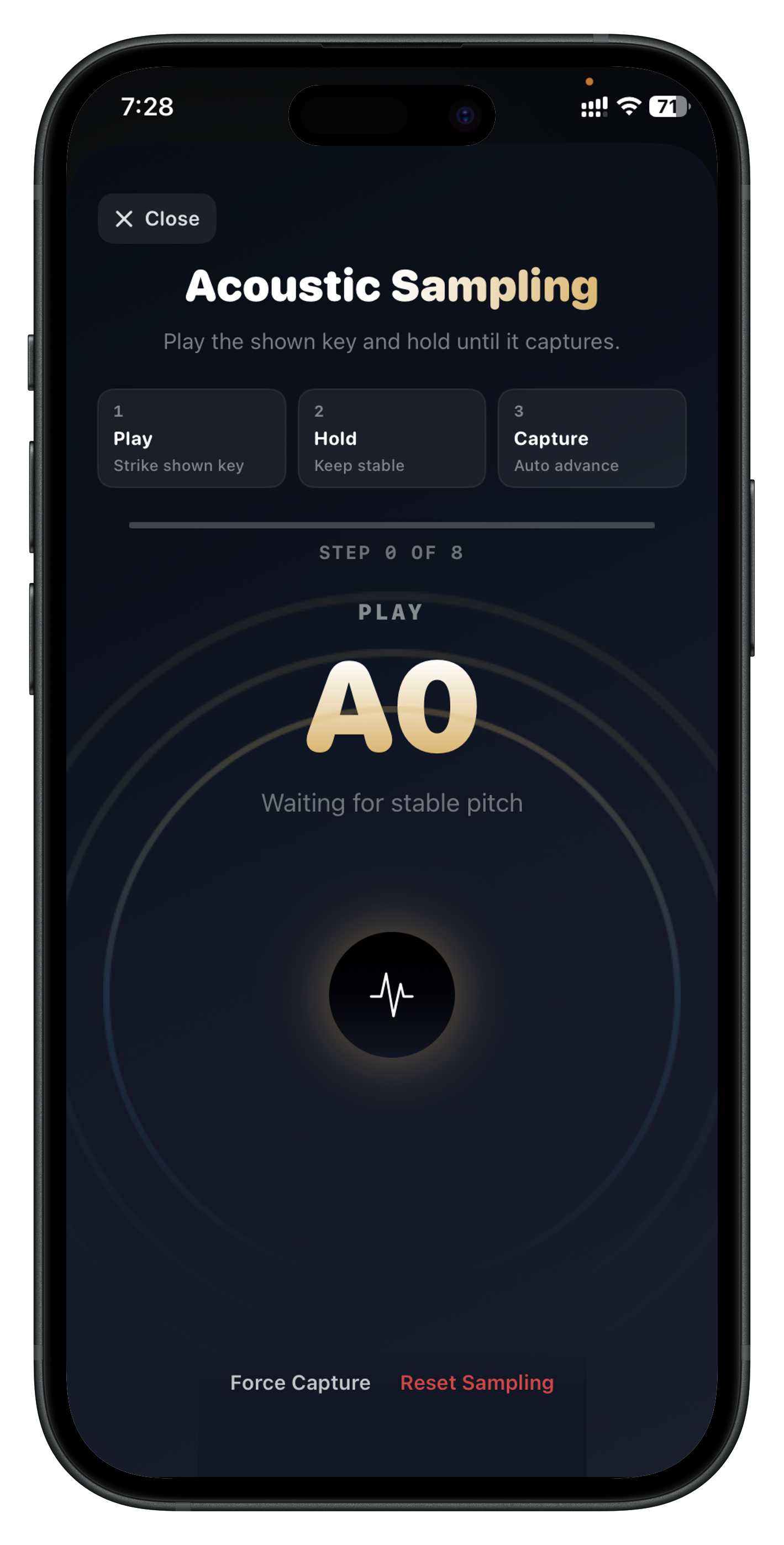
Live strobe feedback, cents readout, and sampling tools support real acoustic piano workflow rather than one-off pitch checks.
PDF report export makes it easier to hand off documentation to owners, teachers, and institutions.
Once a year is the minimum many technicians recommend for a stable home piano, but twice a year is more common if you want the instrument to stay closer to pitch.
Yes. New pianos usually need several tunings in the first year because the instrument is still settling under tension.
Usually not immediately. It is better to let the piano acclimate to the new room first, then tune once temperature and humidity are more stable.
Install Piano Tuner : Tempera if you want live tuning workflow, saved piano records, and cleaner repeat-visit documentation in one app.