Field work rewards repeatable workflow
A professional app should help you move from live tuning to saved records without switching tools or losing context between visits.
Professional comparison guide
The best piano tuner app for professionals should support more than quick pitch checks. It should give stable live feedback at the instrument, help manage stretch and inharmonicity on real pianos, and keep session records you can rely on during repeat service calls.
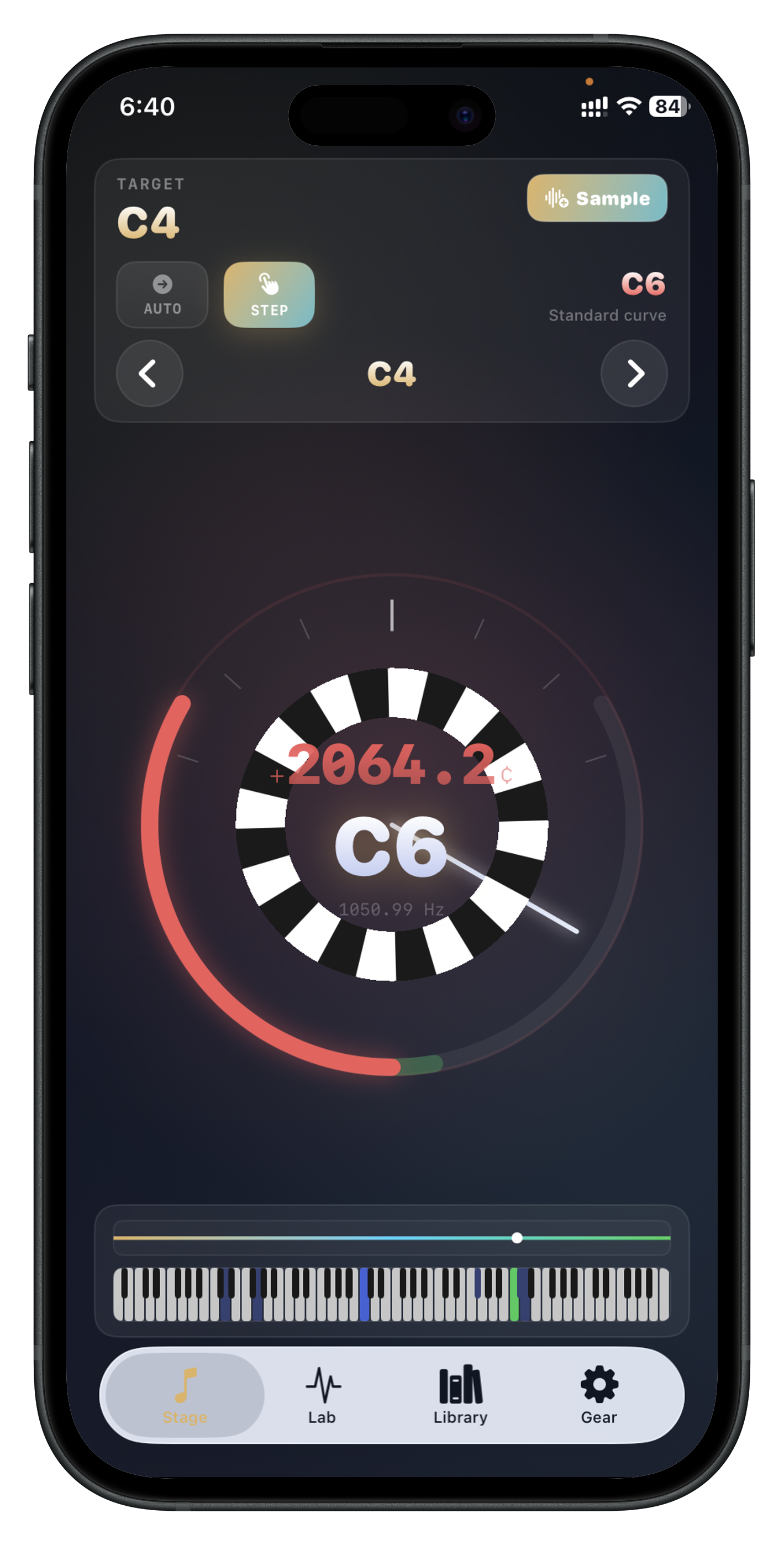
A professional app should help you move from live tuning to saved records without switching tools or losing context between visits.
Stretch behavior, note stability, and inharmonicity are not one-size-fits-all. Professional workflow depends on piano-specific information.
Exportable reports and stored piano details help turn a tuning app into a service tool instead of a one-time pitch display.
The useful question is whether the app helps you tune faster and return with context, not whether it offers the longest marketing checklist.
Saved profiles, prior tuning context, and reports become more valuable as your client base grows.
If the app cannot help with stretch, inharmonicity, and repeatable tuning targets, it will likely feel limited in professional use.
Yes. An iPhone can work well when the app is designed around acoustic piano service sessions rather than generic instrument tuning.
Reliable live feedback, piano-specific analysis, session storage, and documentation tools usually matter more than extra visual effects.
This page is written for piano technicians and advanced tuners comparing iPhone apps before they download or switch workflow.
Install Piano Tuner : Tempera if you want live tuning feedback, piano-specific sampling, saved service records, and report export in one app.